Digimon Card Game vs Pokémon TCG: Which Should You Play? (2026)
Digimon TCG · Comparison Guide · Updated June 2026
Digimon Card Game vs Pokémon TCG:
Which Should You Play?
An honest, head-to-head comparison of two of the biggest TCGs in the world — so you can make the right choice for your playstyle, budget, and goals.
By Big Game Bazaar · Updated: June 2026 · 12 min read
⚡ Quick Answer
Choose Digimon if: You want deeper strategy, more skill expression, and a passionate competitive community
Choose Pokémon if: You want the largest player base, easiest time finding opponents, or you collect as much as you play
Play both if: You enjoy different experiences — many players do exactly this
Budget winner: Digimon — competitive decks cost significantly less than Pokémon
Why Compare These Two?
If you grew up in the 90s or early 2000s, you probably have nostalgia for both franchises. But as card games, Digimon TCG and Pokémon TCG are very different experiences — different mechanics, different communities, different price points, and different skill ceilings.
This guide breaks them down honestly, category by category. We are a Digimon TCG retailer, so we will be upfront: we love Digimon. But we will give you the real picture of both games so you can make the choice that is right for you.
📌 Full Transparency
We sell Digimon TCG products at Big Game Bazaar. That said, we genuinely believe Digimon is the better game — but Pokémon is better in other ways. We will tell you both.
At a Glance: Full Comparison Table
| Category | 🍌 Digimon TCG | ⚡ Pokémon TCG |
|---|---|---|
| Skill Ceiling | ⭐ Very High | Medium |
| Beginner Friendliness | Medium | ⭐ Very Easy |
| Competitive Entry Cost | ⭐ $150–$300 | $300–$600+ |
| Collector Entry Cost | ⭐ Affordable | Expensive (vintage especially) |
| Player Base Size | Large & Growing | ⭐ Massive |
| Finding Opponents | Moderate | ⭐ Very Easy |
| Game Length | 20–35 minutes | ⭐ 15–25 minutes |
| Card Artwork Quality | ⭐ Stunning | Excellent |
| Set Release Frequency | 6–8 sets/year | ⭐ 4–6 sets/year |
| Nostalgia Factor | Strong (90s fans) | ⭐ Universal |
| Unique Mechanic | ⭐ Memory Gauge + Digivolution | Prize Card system |
| Online Play | Digimon Card Game Online | ⭐ Pokémon TCG Live (free) |
| Format Variety | Standard + Unlimited | ⭐ Standard, Expanded, Unlimited |
| Streaming/Content | Growing | ⭐ Massive |
Round 1: Gameplay & Skill Depth
🍌 Digimon TCG
The Memory Gauge is unlike anything in any other major TCG. Both players share a single resource bar — every action you take moves the gauge, and if it crosses zero to your opponent’s side, your turn ends immediately. This creates a constant tension between doing more and giving your opponent free resources.
Digivolution adds another layer: you build stacks of cards, each potentially contributing inherited effects. Planning your evolution sequence 2–3 turns ahead while managing memory is genuinely complex and deeply rewarding.
Skill ceiling: Elite. Memory management separates good players from great ones.
⚡ Pokémon TCG
Pokémon uses an energy attachment system where you attach one energy per turn to power attacks. The Prize Card system — take a prize card each time you KO an opponent’s Pokémon — creates interesting tension around whether to KO smaller or bigger targets.
The game has real depth at the competitive level, particularly around bench positioning, prize trade math, and tech card choices. But the base rules are significantly simpler to teach a new player.
Skill ceiling: High, but more accessible at entry level.
★ Digimon TCG Wins This Round
The Memory Gauge and Digivolution stack create a level of strategic depth that Pokémon cannot match. If you want the more mentally challenging game, Digimon wins this round decisively.
Round 2: Cost to Play Competitively
This is one of the most important practical questions for new players. Here is the honest breakdown:
🍌 Digimon TCG Costs
Starter Deck (ready to play)
$15.99
Budget Competitive Deck
$60–$90
Mid-Range Competitive Deck
$130–$200
Full Optimal Tournament Deck
$250–$350
Booster Box (BT-25)
$119.99
⚡ Pokémon TCG Costs
Theme Deck (ready to play)
$15–$25
Budget Competitive Deck
$150–$250
Mid-Range Competitive Deck
$300–$450
Full Optimal Tournament Deck
$500–$800+
Booster Box (current set)
$143.64
📈 Why Is Digimon Cheaper?
Digimon TCG uses a more stable secondary market. The most competitive cards rarely spike above $30–$40 each, and budget builds are genuinely viable at tournaments. Pokémon’s competitive scene requires multiple copies of $50–$100 cards to build optimal decks.
★ Digimon TCG Wins This Round
Digimon is dramatically cheaper to play competitively. A regional-level Digimon deck costs roughly the same as a mid-range Pokémon budget build. For players who want to compete without breaking the bank, Digimon is the clear winner.
Round 3: Community & Finding Opponents
🍌 Digimon TCG Community
The Digimon TCG community is passionate, welcoming, and growing fast. The competitive scene runs regular regional and national tournaments across North America, Europe, and Asia. Online communities on Reddit (r/DigimonCardGame), Discord, and YouTube have exploded since the English release.
The community skews slightly older than Pokémon — many players are adults who grew up watching Digimon Adventure — which tends to make for more mature, structured game environments at local game stores.
Finding locals: Most hobby stores that carry Pokémon also run Digimon nights. Check the Digimon Card Game official store locator.
⚡ Pokémon TCG Community
Pokémon has one of the largest organized play structures of any TCG in the world. The Play! Pokémon system runs League Challenges, Regional Championships, and the World Championships every year. Content creators, streamers, and YouTube channels number in the thousands.
Walk into almost any game store anywhere in the world and you will find Pokémon players. The sheer scale of the community is unmatched by any TCG except possibly Magic: The Gathering.
The Play! Pokémon organized play system is one of the most developed in any TCG worldwide.
★ Pokémon TCG Wins This Round
Pokémon wins on pure community size. If finding opponents easily is your top priority, Pokémon is still the safer choice — especially in smaller cities where the Digimon scene may be limited to one or two local stores.
Round 4: Collecting & Card Value
Both games have a massive collector base alongside the competitive players. Here is how they compare:
Digimon TCG Collecting
Digimon TCG has some of the most beautiful card artwork in any modern TCG. The Secret Rare and alternative art cards are genuine collector’s items — the Jupitermon SEC from BT-24 and the BeelStarmon Ultimate Rare from BT-25 are examples of cards players want purely for their visual impact. The overall card value ceiling is lower than Pokémon, which means the market is more stable and less driven by speculation.
Japanese Digimon cards often feature different artwork and higher print quality than their English counterparts, creating a secondary import market for collectors.
Pokémon TCG Collecting
Pokémon has one of the most active card collecting markets in the world — both for vintage cards (Base Set Charizard, 1st Edition cards) and modern alternate art cards. The Pokémon TCG collector market intersects with mainstream pop culture in ways no other TCG does, driven by YouTubers, celebrities, and mainstream media coverage.
The downside: the Pokémon collector market is heavily speculative. Card values can swing dramatically based on content creator attention rather than actual game play demand.
⚊ Too Close to Call
Both games offer excellent collector experiences. Digimon gives you more stability and lower entry cost; Pokémon gives you a much larger secondary market, more historical depth, and greater mainstream recognition. Your preference here depends entirely on whether you want to play or collect — or both.
Round 5: The New Player Experience
🍌 Starting Digimon TCG
What you need:
Two Starter Decks (~$32 total) — one Agumon, one Gabumon, or for 2026: ST-23 + ST-24 together. Play them against each other.
Learning curve:
The Memory Gauge takes 3–5 games to feel natural. Digivolution stacks take longer. Expect 10+ games before you feel comfortable.
Resources:
See our complete Digimon TCG Beginner’s Guide — covers every rule, card type, and mechanic from scratch.
⚡ Starting Pokémon TCG
What you need:
A Battle Deck (~$15) and the Pokémon TCG Live app (free) to learn online. The app has a full tutorial mode.
Learning curve:
The base rules are among the simplest of any major TCG. Most people understand the fundamentals within 2–3 games.
Resources:
Pokémon TCG Live has a full built-in tutorial. The official website has rules, and content creators like Tricky Gym cover competitive play extensively.
★ Pokémon TCG Wins This Round
Pokémon is the easier game to learn from zero. The rules are simpler, the app-based tutorial is excellent, and the sheer number of beginner resources online is overwhelming in the best possible way. If you have never played a TCG before, Pokémon is the gentler on-ramp.
Round 6: Card Artwork & Visual Design
Both games invest heavily in card artwork, but their styles are distinctly different.
🍌 Digimon TCG Art
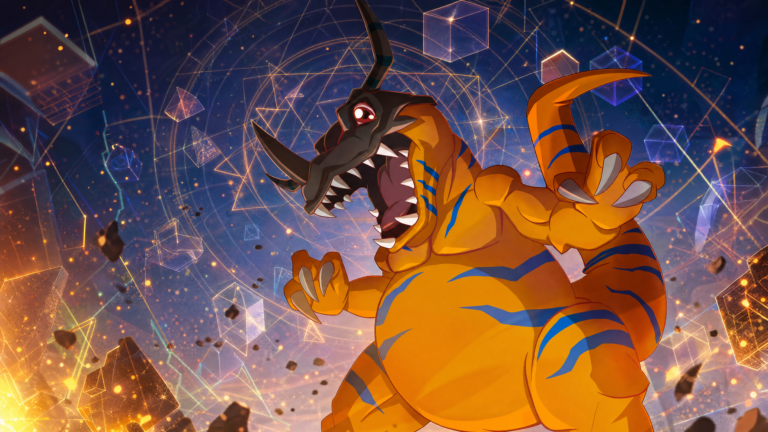
Digimon TCG consistently produces some of the most visually striking art in the hobby. The large card frame (Digimon cards are the same size as Pokémon but use more of the card surface for artwork) allows for dramatic, action-heavy illustrations. The Secret Rare and alternative art cards in particular are jaw-dropping — full-bleed art, stunning holographic treatments, and genuine artistic ambition.
The dark, dynamic aesthetic of many Digimon cards — think ShineGreymon Burst Mode, Omnimon Alter-S, Jupitermon — appeals strongly to older players who prefer a more serious visual tone.
⚡ Pokémon TCG Art
Pokémon TCG has evolved its artwork dramatically since the Sword & Shield era. The Illustration Rare and Special Illustration Rare cards introduced full-scene artwork that tells a story — a Pokémon in its natural environment, interacting with a trainer, or engaged in a moment of genuine emotion. Some of these cards are works of art in the truest sense.
The breadth of art styles is enormous: from the clean classic Base Set style to watercolor illustrations, comic book panels, and abstract impressionism. There is a Pokémon card for every aesthetic taste.
⚊ Too Close to Call
Both games produce stunning artwork. Digimon tends toward dramatic, action-focused illustrations with a darker tone. Pokémon offers more stylistic variety and some genuinely exceptional illustrative storytelling in its high-rarity cards. This is a personal preference call — there is no wrong answer.
Our Honest Recommendation: Who Should Play Which Game
You want strategic depth → Play Digimon TCG
The Memory Gauge and Digivolution stack system reward long-term planning in ways that very few card games can match. If you want a game where smart play consistently wins over lucky draws, Digimon is your game.
You are on a budget → Play Digimon TCG
A competitive Digimon deck costs $150–$300. A competitive Pokémon deck costs $400–$800+. If cost matters, Digimon wins by a wide margin.
You grew up watching Digimon Adventure → Play Digimon TCG
The card game features characters from every Digimon anime series. Seeing Agumon, Gabumon, Omnimon, and the DigiDestined on cards you are actually playing with is a genuinely special feeling.
You are a complete TCG beginner → Start with Pokémon
The simpler rules, free online app with tutorials, and massive number of beginner guides make Pokémon the gentler introduction to trading card games. You can always add Digimon later.
Casual collecting is your main goal → Consider Pokémon
The Pokémon collector market is larger, more liquid, and more mainstream. If you want cards that hold their value or are widely recognized, Pokémon has the edge.
You want to play multiple times a week → Consider both
Many players play Pokémon at their LGS and Digimon online, or vice versa. The games complement each other — Pokémon for social play, Digimon for when you want a real challenge.
Frequently Asked Questions
Is Digimon TCG dying?
Absolutely not. Digimon TCG has grown every year since its international release in 2020. BT-25 introduced the new Ultimate Rare rarity and Dual Card mechanic — Bandai is actively investing in the game’s future. The competitive scene is healthy and growing.
Which game has better cards to open?
This is personal preference. Pokémon packs have a higher hit rate for mainstream chase cards (more people know what Charizard is). Digimon packs have a more consistent pull rate for competitive playables, and the Secret Rare and Ultimate Rare cards are visually stunning.
Can I play Digimon if I have no opponent?
Yes. Digimon Card Game Online (the official digital client) allows you to play against AI or real opponents online. It is not as polished as Pokémon TCG Live but is free and fully functional.
Which game is better for kids?
Pokémon is the more family-friendly entry point. The characters are more universally recognized by younger children, the rules are simpler, and the brand is everywhere. Digimon is better suited to players 12 and up.
Do Digimon and Pokémon players get along?
Generally yes. Many competitive players in both scenes overlap. Both communities share a common roots in 90s anime and monster-collecting culture. Rivalries are mostly playful.
Is Digimon harder to learn than Pokémon?
Yes — but not by an intimidating margin. The Memory Gauge takes a few games to become intuitive. Once it clicks, the game flows naturally. Our Beginner’s Guide walks you through everything step by step.
🗺 Find NC Game Stores
Looking for a local store that runs Digimon or Pokémon TCG events in North Carolina? Games & Hobby Finder NC has the full directory.
🦁 More Tabletop Content
For D&D, board games, and broader tabletop gaming coverage visit The Game Trail — our tabletop lifestyle blog.
🎰 Big Game Bazaar
Shop Digimon TCG at Big Game Bazaar
Sealed product & accessories — Free shipping over $75 — Secure checkout via Stripe
Ready to Try Digimon TCG?
Start with a Starter Deck — $15.99 gets you 54 cards ready to play out of the box. Free shipping on orders over $75.
Singles available through Andrew’s Card Corner on TCGplayer.
Ready to Try Digimon TCG?
- Digimon ST-24 Data Squad Starter Deck — The best entry point for new Digimon players in 2026.
- Digimon ST-23 BeatBreak Starter Deck — Great aggressive option with exclusive BT-25 cards.
- BT-25 Dual Revolution Booster Box — Jump into the current format with the main Block 06 set.